![[Translate to English:]](/media/_processed_/a/b/csm_IMG_4057_Kopie_fbdec856b8.png "[Translate to English:]")
In focus
This is why land-use reduction targets are not being met
14 March 2026
The latest projections for greenhouse gas emissions show that the land use sector (LULUCF) releases significantly more carbon dioxide in the long term than previously thought. You can find questions and answers on this topic in our FAQ.
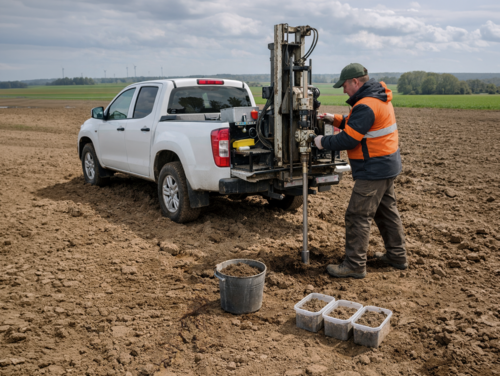
In order to apply fertiliser efficiently and in an environmentally friendly manner, it is necessary to know the amount of nitrogen already present in the soil. Researchers at the Thünen Institute have now standardised the relevant data from the federal states, thereby creating, for the first time, a…
The launch conference of the Information and Coordination Centre for Fisheries Transformation (IKTF) is taking place today. The team will be introducing themselves and inviting participants to help shape the future of coastal fisheries.
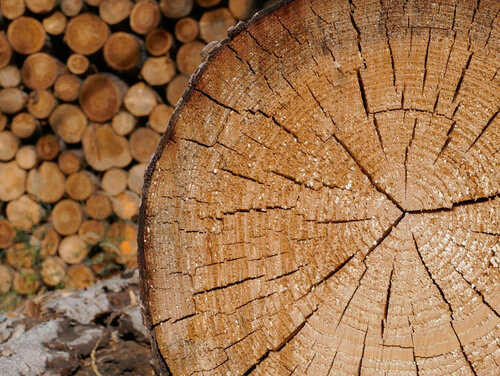
The WEHAM baseline scenario uses recent data to simulate how Germany's forests could develop over the coming decades. This FAQ explains implications of the results and limitations of the projections.
The Thünen Institute.
Research and policy advice on rural areas, agriculture, forests and fisheries.
As a research institute in the portfolio of the Federal Ministry of Agriculture, Food and Regional Identity (BMLEH), we work at the interface of science, politics and society.
- 1 180
Employees, 651 of them scientists
- 15
Institutes conduct research in the fields of rural areas, agriculture, forestry and fisheries
- 1 041
Lectures in 2025
- 895
Publications in 2025
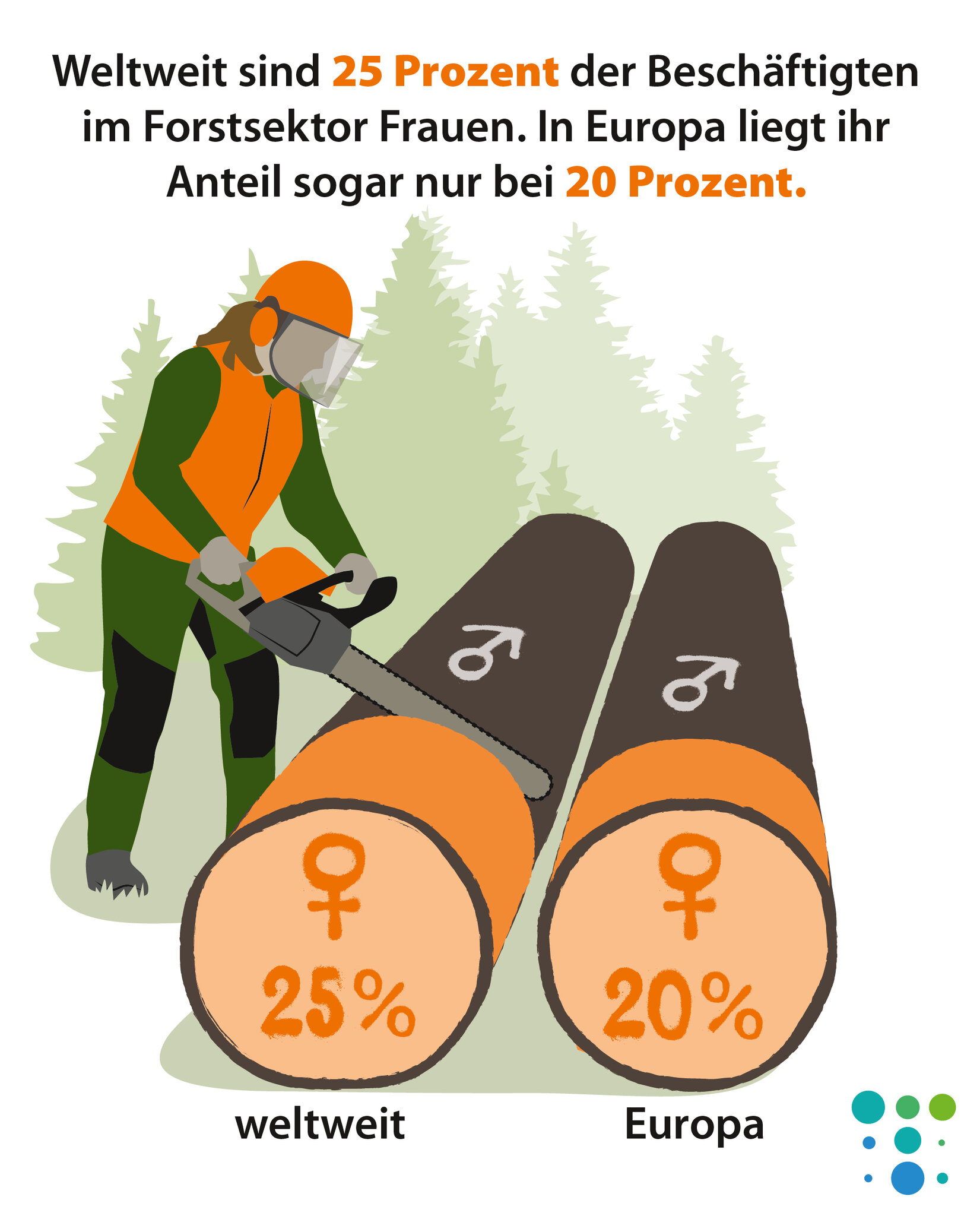
KnowledgeSnack
The gender gap in the forestry sector. Only one in four people in the global forestry sector is a woman. The gender gap in the sector is widest in Europe. This is shown by new estimates that researchers have now presented for the first time at a global level. The findings are based on a new modelling approach in which the Thünen Institute was also involved.
To Wissenschaft erleben (only in German)
New publications
- 0
Iost S (2026) Clusterstatistik Forst&Holz Tabelle für 2023 [Datenpublikation]. 1CSV-Datei, 1 XLSX-Datei; 2. Auflage. Göttingen: OpenAgrar, DOI:10.3220/253-2025-257
- 1
Iost S (2026) Clusterstatistik Forst&Holz Tabellen für 2021 und 2022 [Datenpublikation]. 1 XLSX-Datei, 1CSV-Datei; 2. Auflage. Göttingen: OpenAgrar, DOI:10.3220/253-2025-256
- 2
Vos C, Rösemann C, Haenel H-D, Dämmgen U, Döring U, Wulf S, Eurich-Menden B, Freibauer A, Döhler H, Steuer B, Osterburg B, Fuß R (2026) Calculations of gaseous and particulate emissions from German agriculture 1990 – 2024: Input data and emission results [Datenpublikation]. 1 Excel file. Göttingen: OpenAgrar, DOI:10.3220/253-2026-59
- 3
Stichnothe H, Schweinle J (2026) Carbon footprint estimation of palm oil production systems - impact of land use change and consequences of modeling choices. Carbon Footprints 5:11, DOI:10.20517/cf.2025.90
- 4
Brischke C, Koch G, Appelt J, Hesse L, Nopens M, Stirling R, Temiz A, Volkert K, Wong D (2026) Ersatzhölzer für sibirische Lärche [Vortrag präsentiert beim 10. Terrassendielen-Seminar des GD Holz am 26.02.2026 in Hamburg]. 24 p